

Wanted Dead or a Wild: How Duel Mechanics Shape Risk in Short Sessions
Wanted Dead or a Wild by Hacksaw Gaming is often discussed not just for its volatility, but for how its duel mechanic actively changes the rhythm of play. In short sessions, where players may spin for only a few minutes, this mechanic has a measurable impact on perceived risk, bankroll swings and decision-making. Understanding how duels alter variance is essential if you want to approach this slot with a clear expectation rather than relying on guesswork.
The core idea behind duel mechanics and their volatility profile
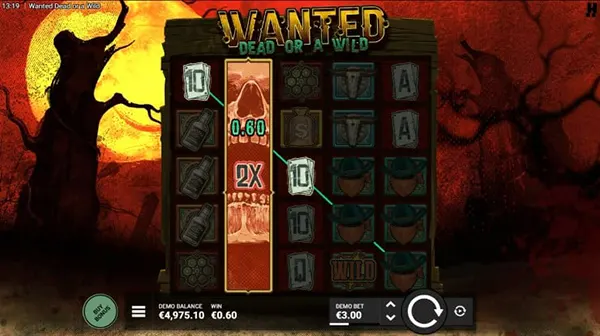
The duel mechanic in Wanted Dead or a Wild is built around expanding wild reels with multipliers, often triggered through bonus features such as Dead Man’s Hand or duel spins. Unlike standard wilds, these reels can stay locked for multiple spins, stacking multipliers that significantly increase payout potential. This creates a structure where most spins produce modest or no returns, while a few sequences generate the majority of winnings.
From a statistical perspective, this is a classic high-volatility design. The RTP (return to player), typically around 96.38% depending on configuration, is distributed unevenly. A large portion of that RTP is tied specifically to duel outcomes. This means that without triggering these features, a short session may appear consistently unprofitable, even though the theoretical return remains intact over the long term.
In practice, duel mechanics compress variance into short bursts. Instead of frequent small wins, the game delivers extended dry periods followed by intense payout spikes. For short sessions, this significantly increases the likelihood of ending in a loss unless a duel feature is triggered early.
Why short sessions amplify perceived risk
Short sessions do not allow enough spins to smooth out variance. In high-volatility slots like this one, the distribution of outcomes is highly skewed. A player spinning for 50–100 rounds is statistically unlikely to encounter the full range of possible outcomes, especially the high-value duel sequences.
This creates a mismatch between mathematical expectation and real experience. The game may be fair in the long run, but in a short session, results are dominated by randomness. Missing a duel feature entirely is not uncommon, and this leads to a higher perceived risk than the RTP suggests.
As a result, players often interpret the game as unpredictable or overly harsh, when in fact it is behaving exactly as designed. The duel mechanic simply concentrates value into rare events, making short-term outcomes more extreme.
How duel features influence bankroll behaviour
Bankroll management becomes particularly sensitive in games with duel mechanics. Because large payouts are tied to specific triggered sequences, the timing of these events determines whether a session feels successful or not. In short sessions, this timing is almost entirely outside player control.
For example, triggering a duel feature early can extend a session significantly, even if subsequent spins are unproductive. Conversely, failing to trigger it within the first few dozen spins can deplete a bankroll quickly, especially at higher bet levels. This creates a front-loaded risk profile.
Another factor is the multiplier stacking system. During duel sequences, multipliers can escalate rapidly, leading to wins that exceed typical expectations for the stake size. These moments can recover losses from earlier spins, but they occur infrequently. This reinforces the importance of session length in balancing outcomes.
The psychological effect of delayed rewards
The duel mechanic introduces a delayed reward structure. Players may go through extended periods without meaningful wins, which can create tension and influence decision-making. In short sessions, this often leads to premature exits before the high-value features are triggered.
There is also a tendency to increase stakes after a series of losing spins, under the assumption that a duel feature is due. This is a cognitive bias rather than a reflection of the game’s mechanics, as each spin is independent. However, the design of duel features can make this belief feel convincing.
Understanding this psychological aspect is important. The combination of rare high rewards and frequent low outcomes can distort perception, especially when time and budget are limited. Recognising this pattern helps maintain a more controlled approach.
Practical implications for short-session strategy
While there is no way to influence outcomes directly, the structure of duel mechanics suggests certain practical considerations. First, session length should be aligned with the volatility level. Very short sessions increase the likelihood of missing key features entirely.
Second, stake sizing plays a critical role. Lower stakes allow more spins, which increases the chance of encountering a duel sequence within the session. This does not guarantee a win, but it improves exposure to the mechanics that drive the game’s RTP.
Third, setting predefined limits is essential. Because duel features can create sudden large wins, it is easy to continue playing in expectation of another sequence. However, these events are independent and not clustered by design.
Balancing expectations with real gameplay conditions
In a real-world context, most players do not engage in long, statistically balanced sessions. Instead, they play in short bursts, often influenced by time constraints or budget limits. In this environment, duel mechanics introduce higher variability in outcomes.
It is more realistic to treat sessions as independent events rather than parts of a long-term average. This means accepting that some sessions will end without significant features, while others may deliver disproportionate returns through a single duel sequence.
By aligning expectations with how the game distributes value, players can approach Wanted Dead or a Wild with a clearer understanding of risk. The duel mechanic does not change the overall fairness of the game, but it significantly alters how that fairness is experienced in short sessions.